Behind the US Veto: Understanding the US Strategy in Gaza
By Aryan Malik
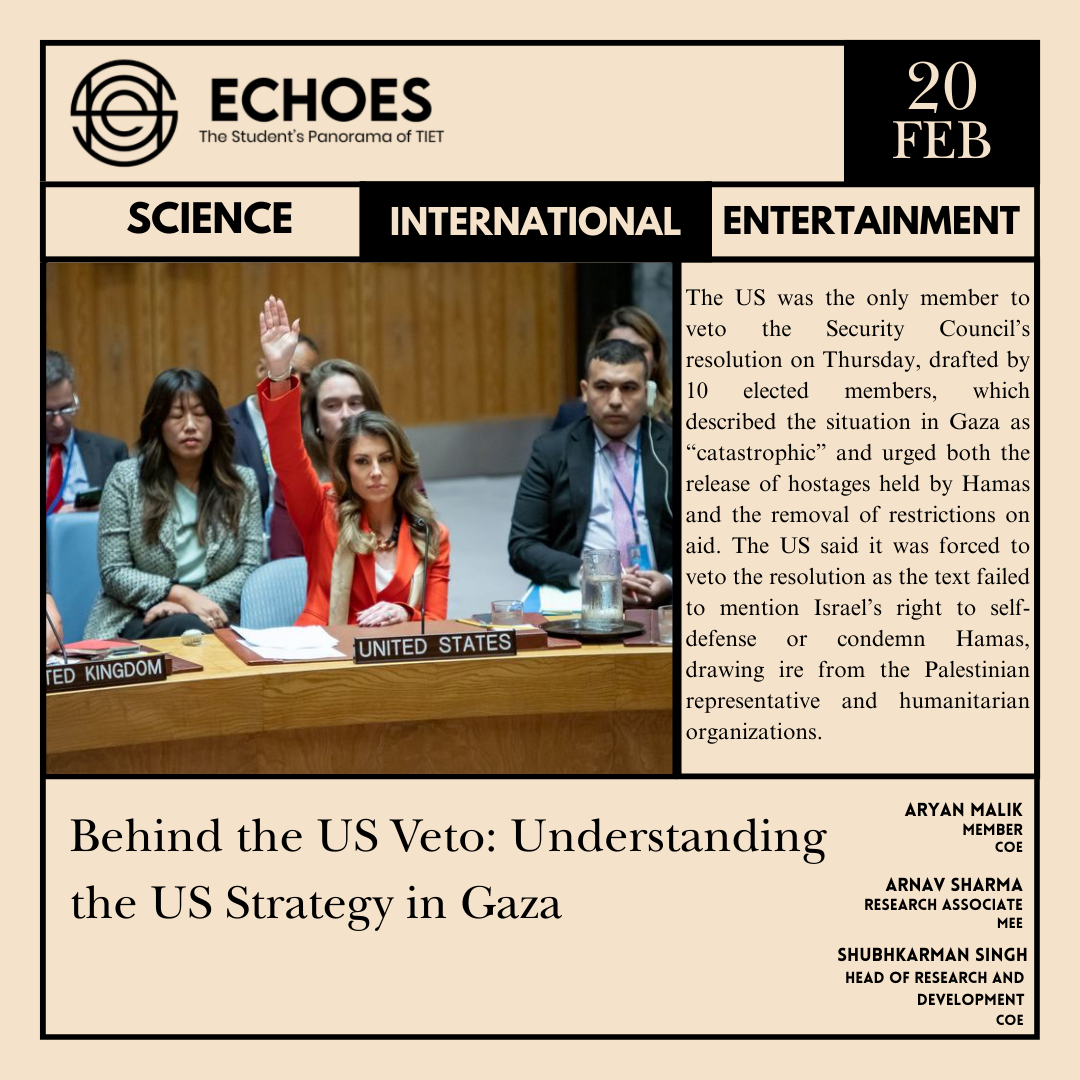
On 18 September 2025, the United States cast the sole vote to block a UN Security Council draft that would have demanded an “immediate, unconditional and permanent ceasefire” in Gaza. Fourteen members supported the text, drafted by ten elected members (Algeria, Denmark, Greece, Guyana, Pakistan, Panama, Republic of Korea, Sierra Leone, Slovenia, and Somalia), while the US opposed. As U.S. deputy envoy Morgan Ortagus put it before the vote: “It fails to condemn Hamas or recognise Israel’s right to defend itself, and it wrongly legitimises the false narratives benefitting Hamas, which have sadly found currency in this council.”
The draft characterised conditions in Gaza as “catastrophic,” demanded the release of hostages and called for lifting restrictions on aid. The conflict traces to the 7 October 2023 Hamas-led attack on southern Israel (≈1,200 killed; ~250 taken hostage); Gaza’s Hamas-run health authorities report more than 65,000 deaths and mounting malnutrition and displacement since. Sponsors and UN officials stressed the Council’s majority message for relief and hostage resolution; Palestinian Ambassador Riyad Mansour called the US action “deeply regrettable,” saying the veto prevented the Council from acting to protect civilians.
Implications are immediate and structural: the veto sustains diplomatic paralysis at the Security Council, shifts pressure to the General Assembly and other fora, and intensifies NGO and UN appeals for open crossings and scaled humanitarian access. Humanitarian agencies (MSF, IRC) described the veto as a grave setback to relief efforts and urged alternative diplomatic tracks to secure aid and hostage releases.
Source: bbc.com, news.un.org