Cloud Seeding: Can Artificial Rain Tackle Delhi’s Pollution?
By Awanti Prakash
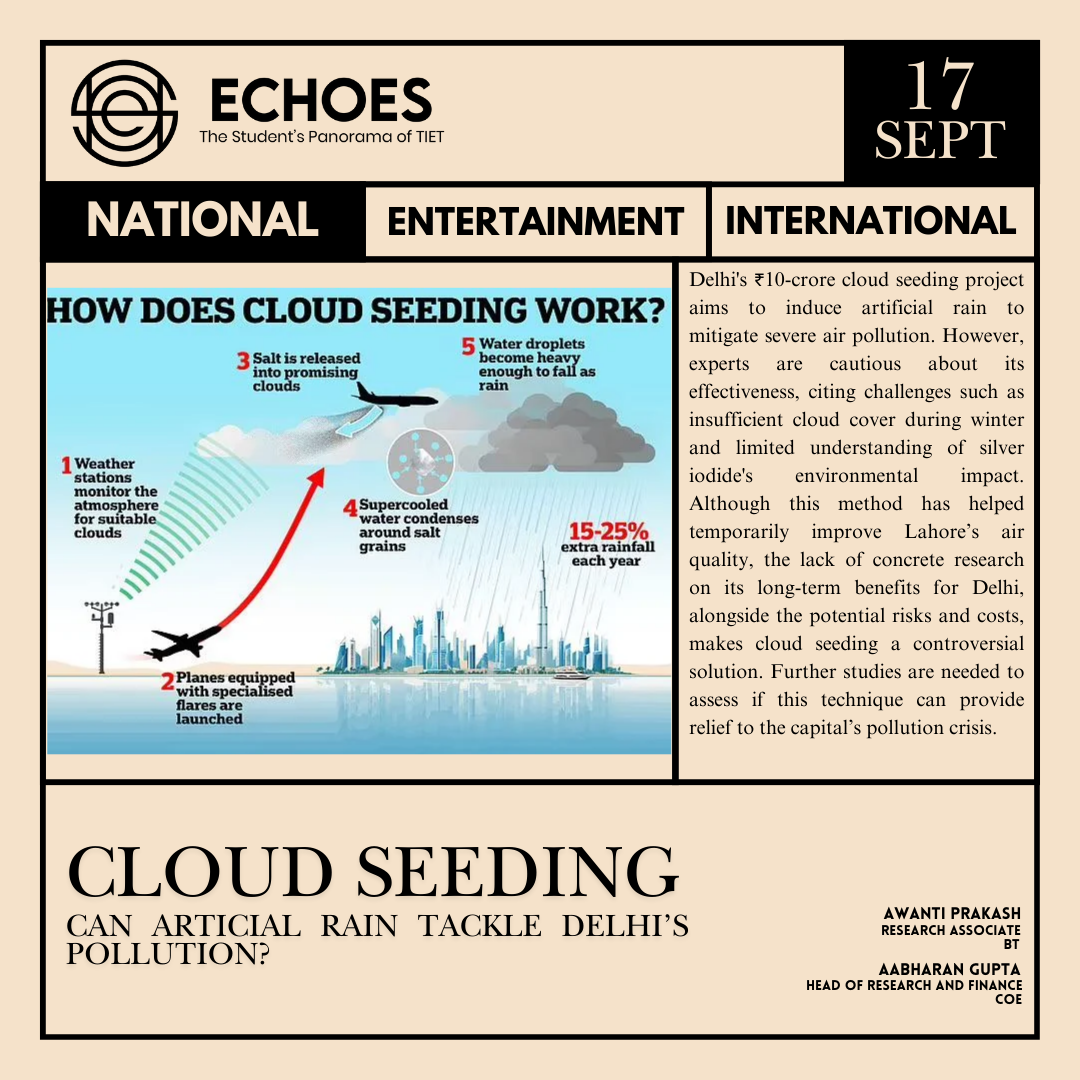
Cloud seeding, a weather-modification technique, involves releasing chemicals such as silver iodide into the atmosphere to enhance rainfall. With Delhi facing hazardous air quality levels, the Delhi government, in collaboration with IIT Kanpur, has proposed a two-phase project to create artificial rain as an emergency solution to combat the pollution crisis. The initiative is estimated to cost ₹10 crores. The first phase will target 300 square kilometers at ₹3 crores, and based on its success, the second phase could potentially extend to 1,000 square kilometers. While cloud seeding briefly improved Lahore’s AQI in 2023, its effectiveness in addressing Delhi’s pollution remains uncertain.
Experts have highlighted significant challenges, including the scarcity of clouds in winter and a lack of comprehensive research on the environmental impact of silver iodide. Scientists warn that inconsistent outcomes, coupled with the high cost, might render this approach impractical. More research and data are needed before cloud seeding can be deemed a viable and sustainable solution to Delhi’s pollution problem.
Source: www.hindustantimes.com