Gold's Glitter Fades: The Metal That Forgot Its Purpose
By Dhruv Garg
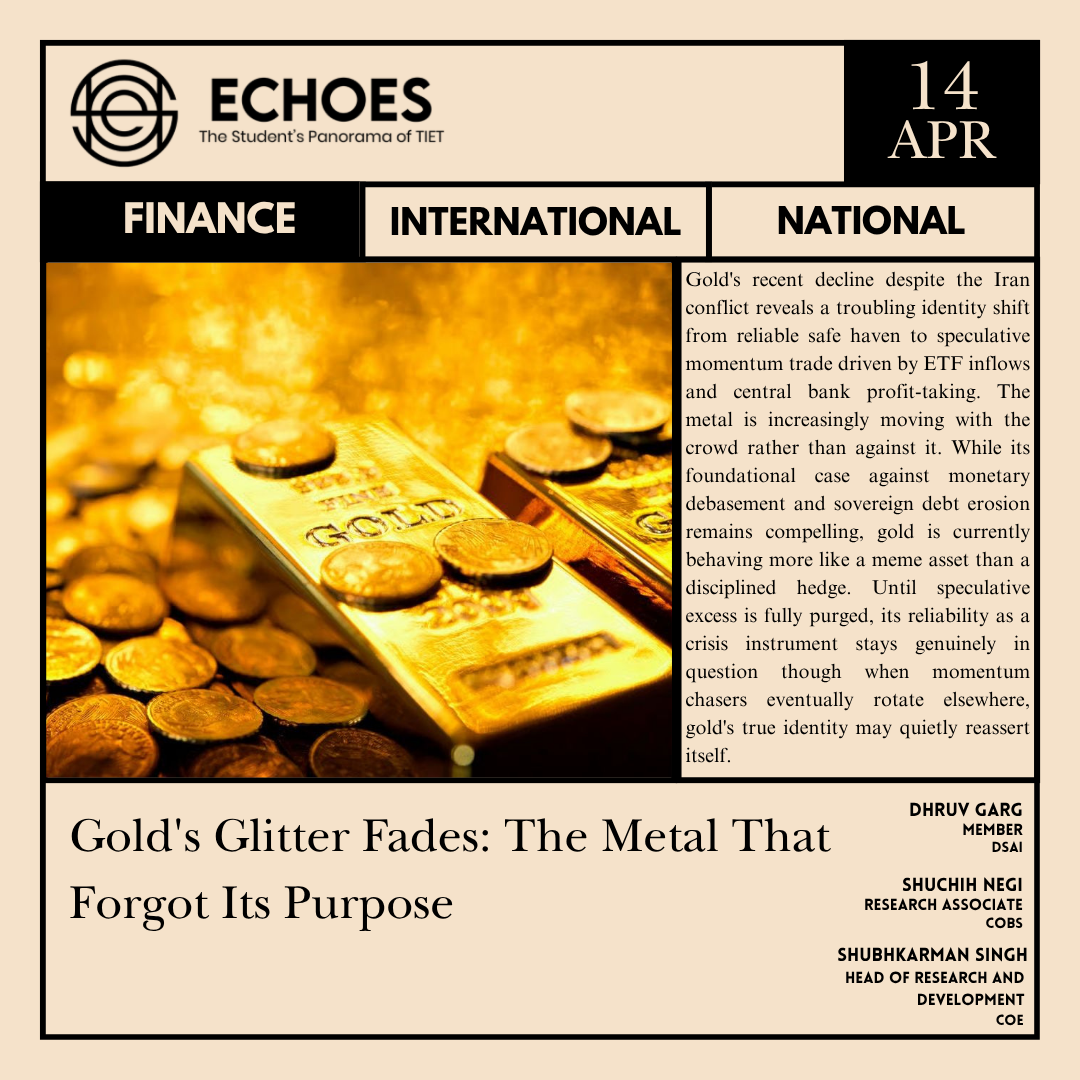
For decades, gold wore a single, unimpeachable crown: the ultimate safe haven. Wars, inflation, collapsing currencies — gold always showed up. But something strange has happened in the months since the American-Israeli strikes on Iran. The very shock that should have sent gold soaring instead watched it tumble nearly 15%, more than global equities. The hedge didn't hedge. The insurance didn't pay out.
The explanation cuts deeper than a bad quarter. Gold has quietly transformed from a disciplined store of value into something far less noble — a momentum trade, a meme asset dressed in ancient credibility. Its 60% surge between last summer and late February was turbocharged not by geopolitical wisdom but by speculative flows into exchange-traded funds, whose holdings swelled by 25% to around 4,200 tonnes. Central banks of Turkey, Poland and India were simultaneously cashing profits to fund government spending. When the speculative bets unwound, gold fell with the crowd, not against it. Bitcoin's shadow, once considered gold's pale digital imitation, now falls uncomfortably close.
Yet to write gold's obituary would be premature. Its foundational case — protection against the debasement of money, bloated sovereign debt, and governments tempted to inflate their way out — remains structurally intact. The meme traders will eventually chase the next moon-bound asset, and when they do, gold's long-term identity may quietly reassert itself. The question investors cannot yet answer is a deceptively simple one: at what price does the last fair-weather believer finally walk away?
Sources: economist.com