The Hormuz Chokepoint: Maritime Vulnerability and the Escalation of Energy Warfare
By Aryan Malik
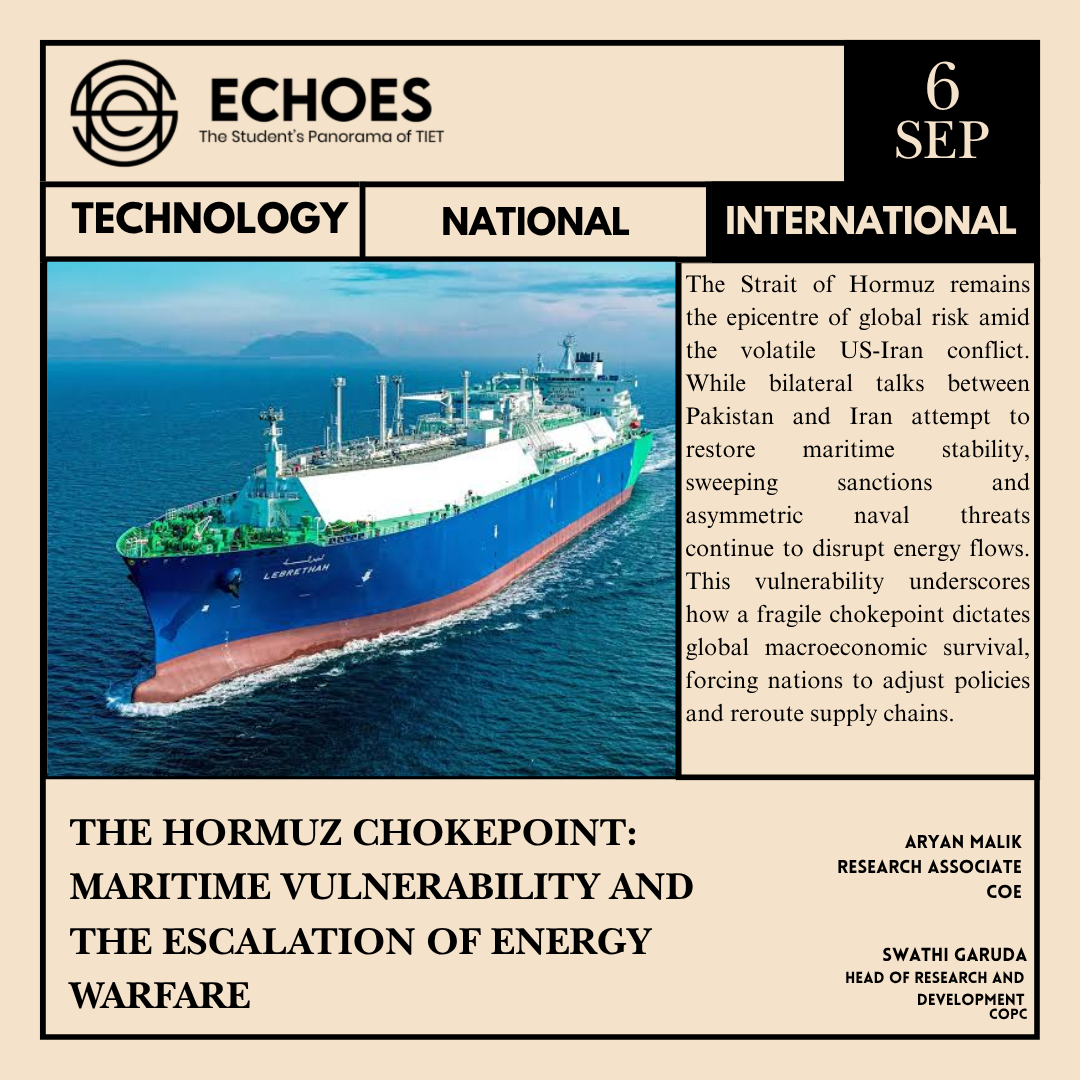
Following the fragile framework laid out in recent diplomatic engagements, the Strait of Hormuz has re-emerged as the central theatre of global energy friction. The "on-again, off-again" conflict involving Iran has drastically escalated operational risks across maritime corridors. While bilateral engagements between Pakistan and Iran have explored reopening the waterway to ease West Asian tensions, enforcement remains highly fragmented. Concurrently, a wave of US sanctions targeting international oil traders and India-based entities over links to Iran underscores the aggressive economic posturing enveloping the region.
Structural Flaws in Supply Chain Security: The operational reality within the Strait highlights deep systemic vulnerabilities in international maritime logistics. Despite the UN Security Council addressing the Strait of Hormuz as a paramount geopolitical concern under Denmark’s August 2026 presidency, commercial vessels continue navigating an increasingly weaponised environment. This exposure is magnified by the asymmetric nature of modern naval warfare, capable of choking narrow shipping arteries without requiring a full-scale conventional blockade. In response, dozens of nations are already intervening domestically—explicitly lowering energy taxes to insulate consumers from escalating oil and gas volatility.
Rerouting Global Trade and Strategic Alignments: The fallout extends well beyond transient price spikes, driving an accelerating structural realignment of global trade routes. As the United States and China intensify competition over maritime choke points and global energy dominance, transit unreliability through the Persian Gulf is compelling dependent economies to aggressively diversify their import channels. By turning a critical waterway into a high-risk zone, these persistent disruptions demonstrate how strategic chokepoints dictate global macroeconomic stability, leaving energy markets in a perpetual state of high-readiness.
Summary: The Strait of Hormuz remains the epicentre of global economic and maritime vulnerability amid the volatile US-Iran confrontation. Despite diplomatic efforts to restore stability, sweeping sanctions and asymmetric naval operations continue to threaten maritime transit. This fragile artery exposes the dependency of global supply chains on narrow geographical corridors, compelling import-reliant nations to adjust domestic energy policies and actively reroute international trade.
Sources: economictimes.com, isa-world.com, pewresearch.org