Live Concert Boom and their Economic Impact
By Sukriti Goel
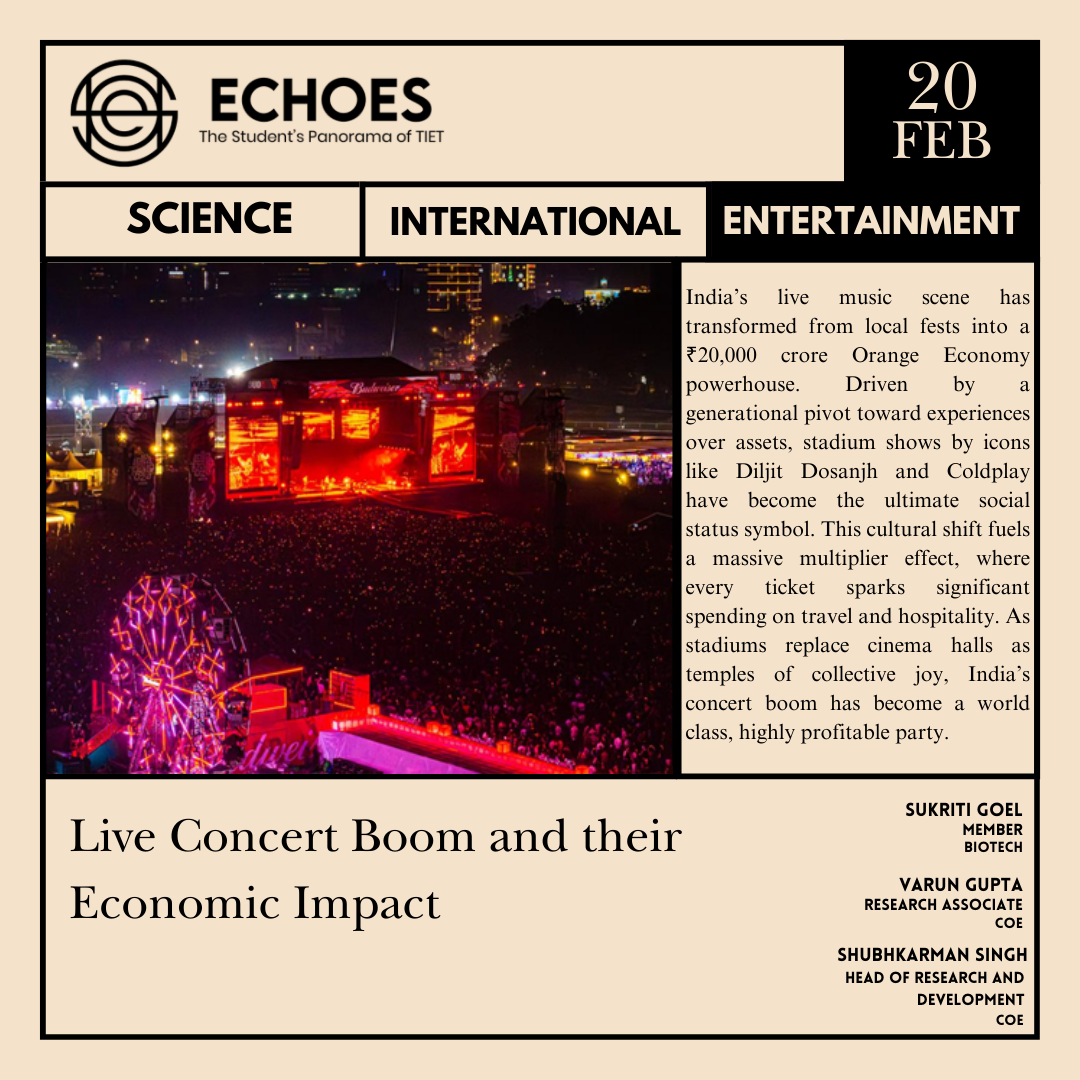
Remember when live music in India meant a neighbourhood jagran, a local wedding band, or a slightly out of tune college fest, in 2026, that era feels like a distant memory. The nation has traded its unplugged vibe for a high voltage, stadium sized identity. From the global Dil-Luminati takeover to Chris Martin of Coldplay leading 110,000 voices in Ahmedabad, India is no longer just a stop on a tour it’s the ultimate destination.
This isn't just about music, it’s a seismic pop-culture transformation. We’ve moved from the cosy MTV Unplugged vibes of the 90s to the high definition Era of Eras. For Gen Z and Millennials, the post-pandemic world has birthed a new lifestyle anchored in visceral, shared experiences.
In 2026, a concert ticket is the new designer bag, a high-octane social currency. The sensation begins weeks before the first note is played: the frantic ticket-war rituals, the curated concert fit shopping sprees, and the buzz of gig-tripping to cities like Ahmedabad or Pune. Attending a show is a high definition branding exercise for one's digital persona. Capturing that one perfect transition of Diljit Dosanjh shouting "Punjabi Aa Gaye Oye" or swaying to Ed Sheeran’s acoustic guitar is worth more to many fans than the music itself. It’s a modern pilgrimage, a shared cultural ritual that signals social currency far more effectively than any material asset.
This cultural energy is the fuel for a massive economic engine. The Economic Survey 2025–26 has officially recognized the Orange Economy a creative sector driven by IP and artistic expression as a vital growth lever. India’s live entertainment sector has now soared past the ₹20,000 crore mark, proving that a single stadium show can act as a localized economic stimulus.
The multiplier effect is staggering: for every ₹100 spent on a ticket, fans inject an additional ₹585 into local transport, stay, and retail. With 76% of young Indians visiting a city for the first time just for a concert, music is now the primary driver of domestic tourism.
As we move further into 2026, the stadium has replaced the cinema hall as India’s new temple of collective joy. The traditional middle class dream of gold and real estate has been disrupted by a generation that treats memories as assets and experiences as identity. While industry growing pains like the scalping crisis persist, the shift is irreversible. India has finally found its rhythm, and it’s sounding like a very profitable, world class party.
Sources: thehindu.com , ficci.in, economictimes.com