Navigating the New Geopolitical Architecture: Global Realignment and Strategic Hedging in Early 2026
By Aman Kumar
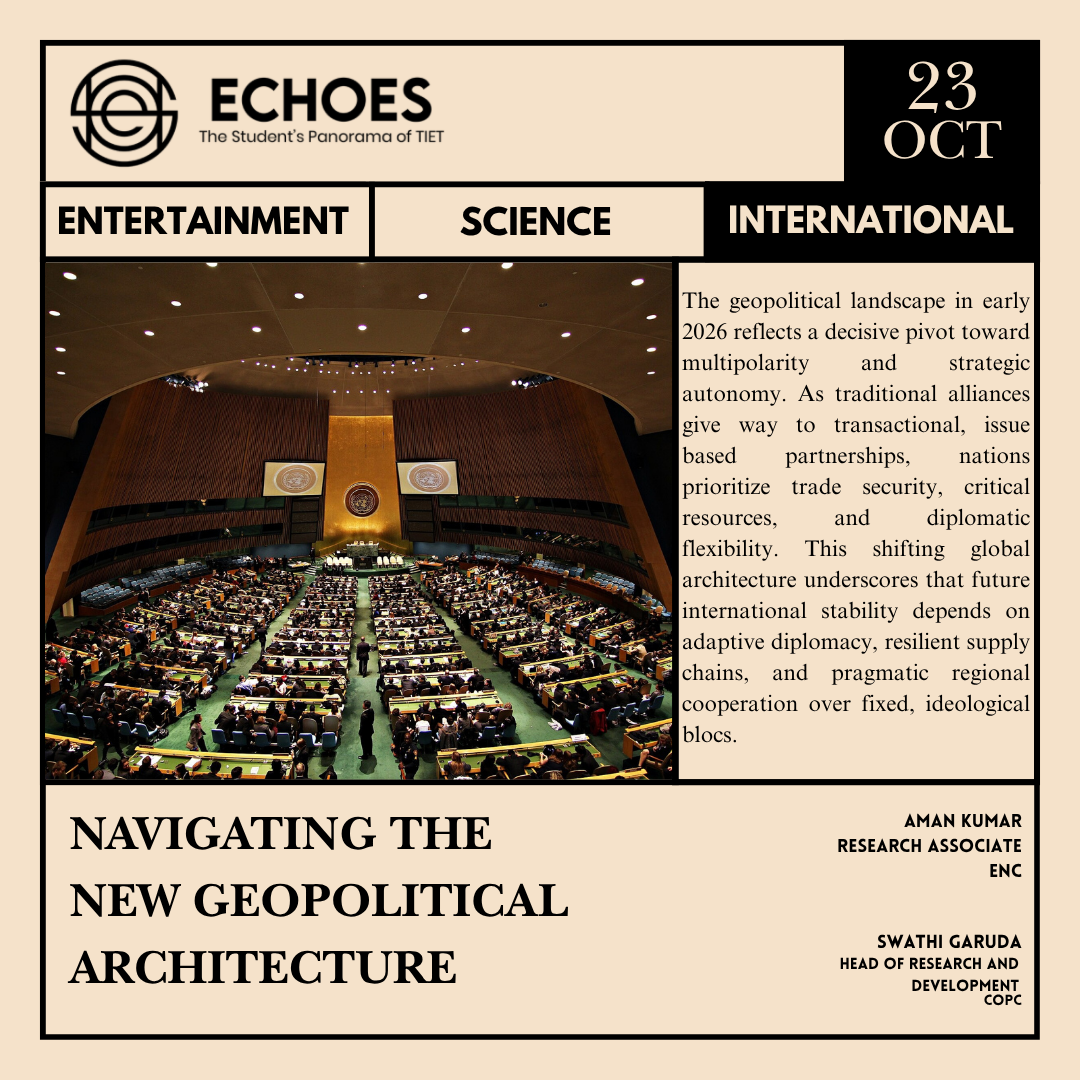
As we move through early 2026, international affairs are undergoing a fundamental transformation. The rigid alliance structures of past decades are increasingly giving way to a more fluid, multipolar global order. Across diplomatic corridors, middle powers and emerging economies are stepping away from blanket commitments, favoring transactional diplomacy, strategic hedging, and regional self-reliance.
1. The Dominance of "Transactional Diplomacy": Multilateral frameworks are facing structural strain as nations increasingly prioritize bilateral arrangements tailored to narrow strategic goals. Foreign policy in 2026 is noticeably tactical, sovereign states are forming issue-specific coalitions focusing strictly on trade access, defense technology co-development, or resource security without aligning on broader ideological lines.
2. Re-Engineering Global Trade Routes: Heightened tariff friction and supply chain vulnerabilities have accelerated the development of alternative trade routes. Countries are recalibrating their commercial corridors to protect domestic industrial capacity while hedging against geopolitical bottlenecks. This has elevated the strategic importance of regional trade agreements across Asia, Latin America, and the Middle East, redrawing classic shipping networks.
3. Assertive Non-Alignment in the Global South: Developing nations and middle powers across Africa, South Asia, and Latin America are leveraging their critical mineral assets, demographic weight, and maritime locations to secure favorable terms from all major global powers. Rather than choosing sides in broader power competitions, these state actors are establishing strategic autonomy, effectively becoming pivotal decision makers in global diplomacy.
Summary: The geopolitical landscape in early 2026 reflects a decisive pivot toward multipolarity and strategic autonomy. As traditional alliances give way to transactional, issue-based partnerships, nations prioritize trade security, critical resources, and diplomatic flexibility. This shifting global architecture underscores that future international stability depends on adaptive diplomacy, resilient supply chains, and pragmatic regional cooperation over fixed, ideological blocs.
Sources: ey.com, css.ethz.ch