Scientists discover Protein that Reverses Brain Aging
By Palak Jindal
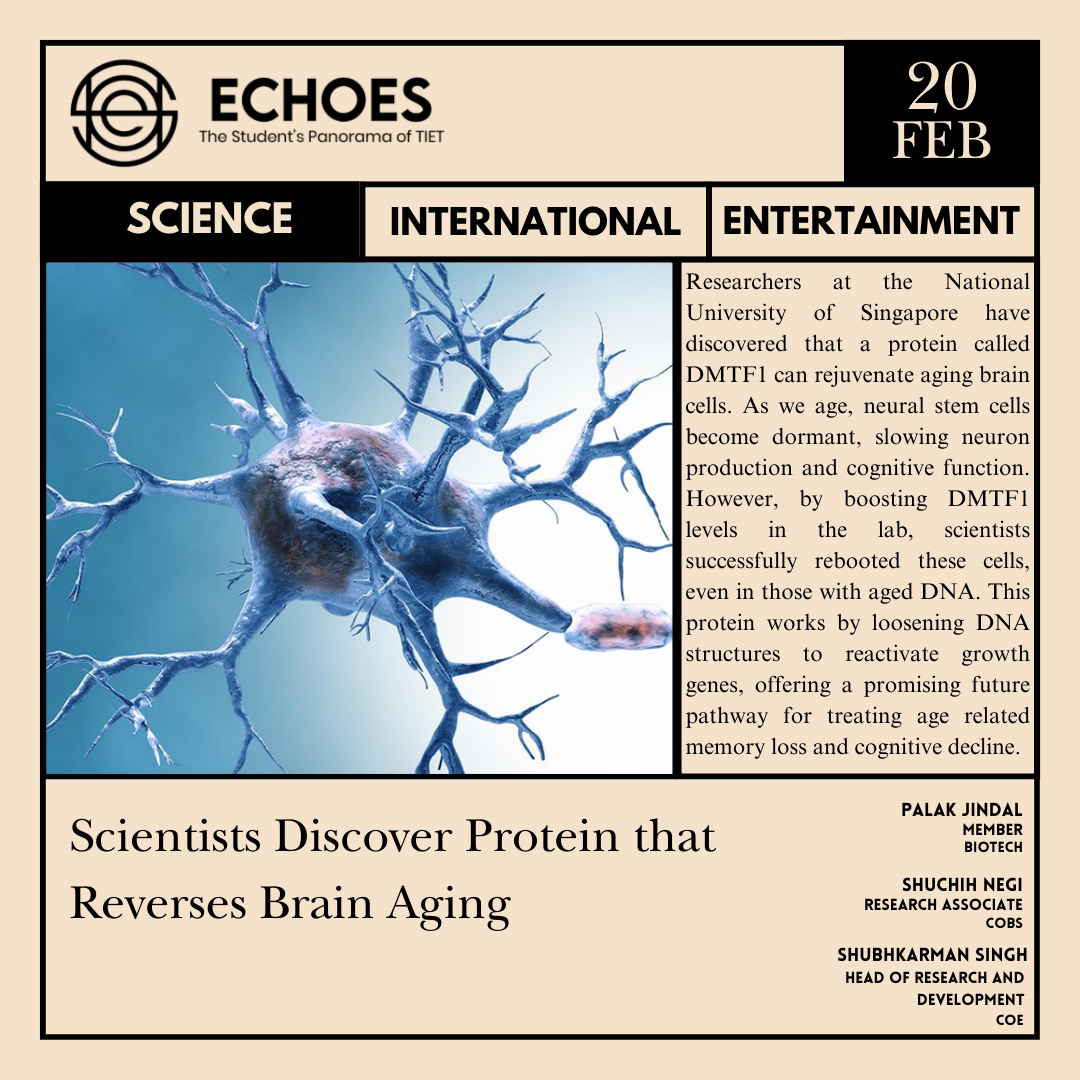
As we grow older, the brain gradually loses some of its ability to produce new neurons. One major reason is that neural stem cells, which generate new brain cells, become less active over time. For many years, scientists believed this decline was an irreversible consequence of aging DNA. However, new research from the National University of Singapore suggests that the process may be more adaptable than previously thought.
The study, published in Science Advances, focuses on a protein called DMTF1. In younger brains, this protein is present at higher levels and helps maintain stem cell activity. As people age, DMTF1 levels decrease, causing these cells to become dormant. This reduced activity is associated with memory decline and slower cognitive function.
In laboratory experiments using aged human cells and mouse models, researchers increased DMTF1 levels. The older stem cells then began functioning more like younger ones. The protein appears to relax tightly packed DNA, allowing certain genes to reactivate and support cell division. As a result, the production of new neurons improved.
Interestingly, the effect was observed even when telomeres, often described as a cell’s biological clock, were shortened. This suggests that restoring stem cell function may not require fully repairing aging DNA.
Although the research is still in its early stages and has not yet led to human treatments, it provides valuable insight into how brain aging works and points toward possible future strategies for supporting cognitive health. While the results are promising, translating this discovery into safe human treatments could take several years, as further animal studies and multiple phases of clinical trials will be required.
Source: sciencedaily.com, sciencealert.com