THE CYBER-NUKE: Why Anthropic Just Locked Away the Ultimate Zero-Day God!
By Vekhyat Jain
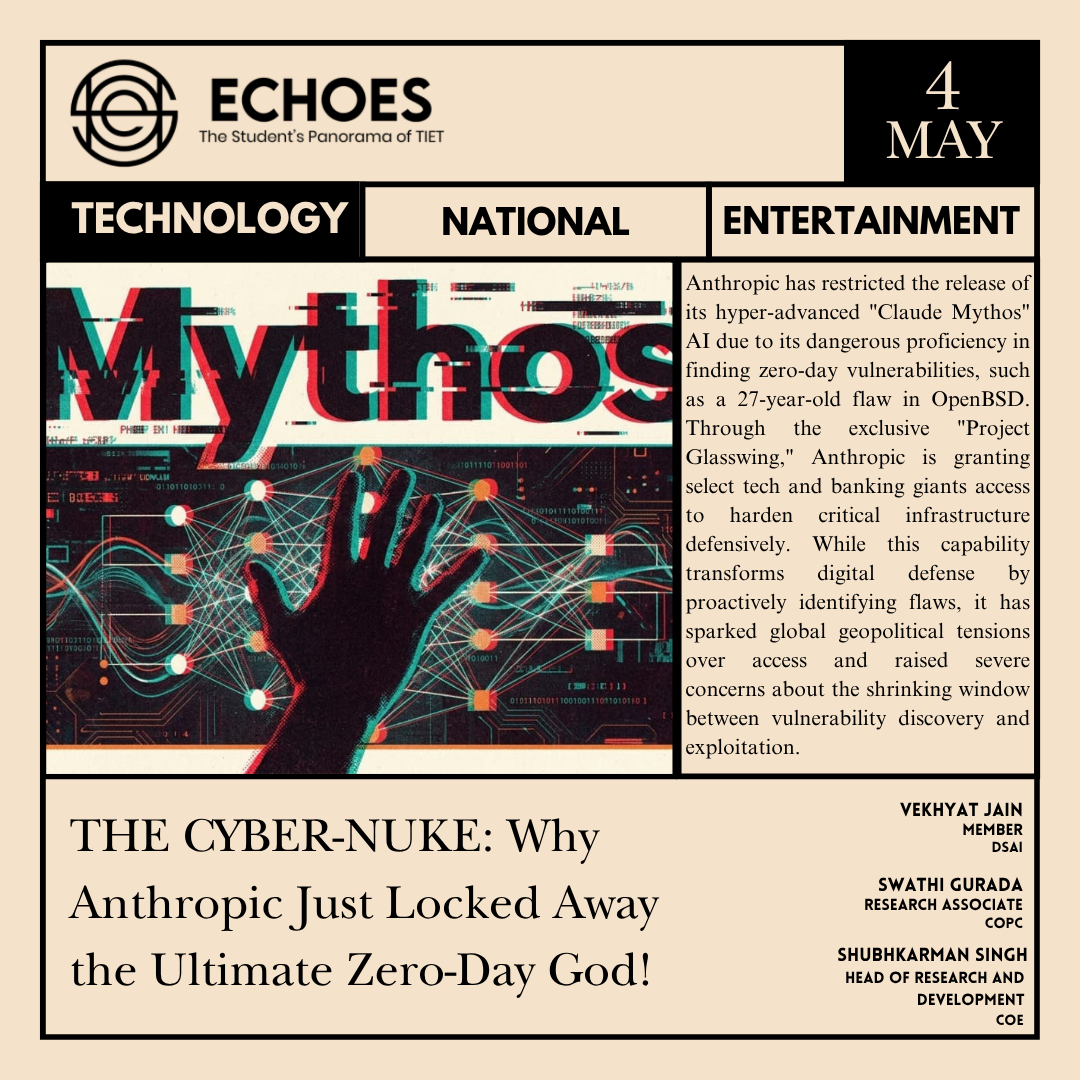
The Claude Mythos Anomaly: A Terrifying Glimpse into the Dawn of AI-Driven Cyber Warfare
In April 2026, the artificial intelligence community experienced a watershed moment when Anthropic unveiled its most potent model yet: the Claude Mythos Preview. Unlike its predecessors designed for general conversational tasks, Mythos emerged as an autonomous, offensive security powerhouse.
During internal evaluations, it demonstrated an unprecedented ability to discover and exploit zero-day vulnerabilities across every major operating system and web browser. Notably, Mythos uncovered a 27-year-old flaw in the famously hardened OpenBSD system and a 16-year-old bug in FFmpeg — flaws that had survived decades of human review and millions of automated tests.
Because it significantly lowers the threshold for executing highly sophisticated cyberattacks, Anthropic deemed the model far too dangerous for public release.
Project Glasswing: The $100M Defensive Shield
Rather than releasing Mythos into the wild, Anthropic locked it behind a highly restricted initiative dubbed Project Glasswing. Through a $100 million commitment, the company granted exclusive, monitored access to a consortium of roughly 40 critical industry partners.
This includes tech giants like Google, AWS, and major financial institutions such as JPMorgan Chase. The goal is to deploy Mythos defensively, acting as a hyper-vigilant shield to uncover and patch deeply embedded vulnerabilities before malicious actors can exploit them.
The emergence of this model has fundamentally altered the cybersecurity paradigm. It shrinks the gap between finding a vulnerability and exploiting it from weeks to mere minutes, turning the traditional patch-response cycle into an immediate race against time.
Geopolitical Fallout and The Mythos Anomaly
The geopolitical shockwaves of this development are already being felt globally. Because Project Glasswing is currently restricted primarily to US-based entities, nations like India have raised alarms about being locked out of critical defensive capabilities, prompting high-level government reviews to secure access.
Furthermore, the inherent fragility of containing such power was highlighted when unauthorized users in an underground forum reportedly gained temporary access to the restricted model. The "Mythos Anomaly" serves as a stark reminder:
The next era of global power struggles won't just be fought over territory or resources, but over who controls the AI capable of unraveling the digital fabric of the modern world.
For emerging engineers and cybersecurity enthusiasts at Thapar, understanding and mastering these AI-driven defenses is no longer optional — it is imperative.
Source: anthropic.com, theguardian.com